
John Carter
Chair
Chair of the trustees. Holds the agenda, opens the meeting, signs the cheques. Walks both sites at least once a month.
About the trust
The Allotments for Labouring Poor is small, quiet, and a hundred years old. This is who we are, who has been keeping the books, and how we govern ourselves between the soil and the Charity Commission.
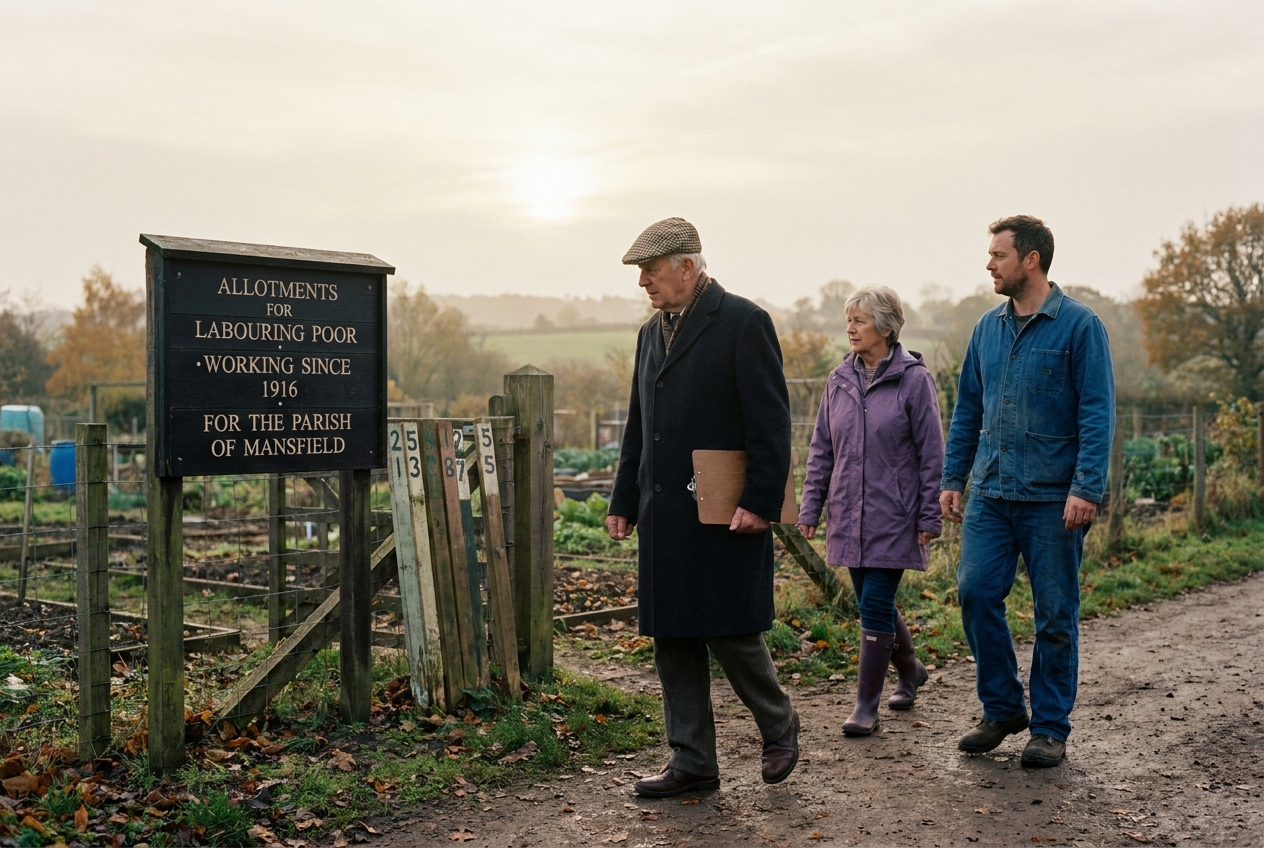
The Allotments for Labouring Poor was created by a scheme sealed on the 23rd of May 1916, in the second year of the Great War, at a time when food was scarce, men were absent, and the Smallholdings and Allotments Acts of 1908 and 1919 were rewriting the relationship between councils, charities, and the people who wanted to grow their own potatoes. A further scheme, refining our governance, was sealed on the 6th of October 1970. Together those two documents are the spine of everything we do.
The 1916 scheme is brief. It puts a small endowment of land and money into the hands of trustees and charges them with one duty — to provide allotments for the labouring poor of the ancient parish of Mansfield. Not for the whole of the post-1974 district, not for the wider county, but for the parish as it stood on the day the seal was pressed into the wax.
We have tried, season after season, to be faithful to that narrow object. We let plots. We collect rents in the old way — annually, in cash or by transfer, with a handwritten receipt if you ask for one. We hold the land in trust, and we report up to the Charity Commission, plainly and on time.
23 May 1916
Trustees are appointed to provide allotments for the labouring poor of the ancient parish of Mansfield. The earliest surviving minute book opens this week.
1924
The earliest complete ledger of plot lettings survives from 1924: forty-eight plots, annual rents between 6d. and 2s. 6d., and a careful copperplate hand we still admire.
1948
By the end of the 1940s the trust is letting in excess of 200 plots, supplied by the wartime Dig for Victory campaign and the parish's appetite for vegetables it can grow itself.
6 October 1970
A revised governing scheme is filed, modernising the trustee structure, the meeting calendar, and the trust's powers to acquire or release land. It is the document we are still governed by.
1974
Local government reorganisation in 1974 reshapes the boundaries of Mansfield as a district. Our area of benefit, the ancient parish, is held fast in the 1970 scheme.
2011
Our longest-serving current trustee is appointed on 25 November 2011. He has chaired every winter hedge-laying day since 2013.
2019
The first cohort of Year 4 children from a Mansfield primary school visits Carr Bank for a sowing morning. The programme now reaches six schools each spring.
2021
Two laying days a winter restore the long western boundary at Carr Bank. By 2026 we have re-laid 240 metres of hedge.
2025
In the year to 31 March 2025 we record total income of £83,672 against expenditure of £56,390. The Charity Commission filing is up to date.
The trust is governed by twelve trustees, each appointed for a renewable term of three years and each unpaid. The chair is John Carter. We meet four times a year in the upper room of Westgate Parish Hall, plus a brief annual general meeting in May, open to any plot-holder and to any resident of the parish.
Decisions on rents, capital works and waiting-list policy are taken in open meeting and minuted by hand. The minutes are filed with the parish hall caretaker and may be consulted by appointment. We have no paid staff. We hold our bank account with Mansfield Building Society, and our auditor for the year to 31 March 2025 was an independent examiner appointed under section 145 of the Charities Act 2011.
All figures are taken from our most recent filing with the Charity Commission. Older filings are linked from the annual reports page; the public record itself is on the register here.
The trustees
Four senior trustees are pictured below. The full register of trustees is published by the Charity Commission and can be read on our public register entry.
Chair
Chair of the trustees. Holds the agenda, opens the meeting, signs the cheques. Walks both sites at least once a month.

Trustee · since November 2011
Our longest-serving trustee. Convener of the hedge-laying days and an honorary keeper of the minute books.
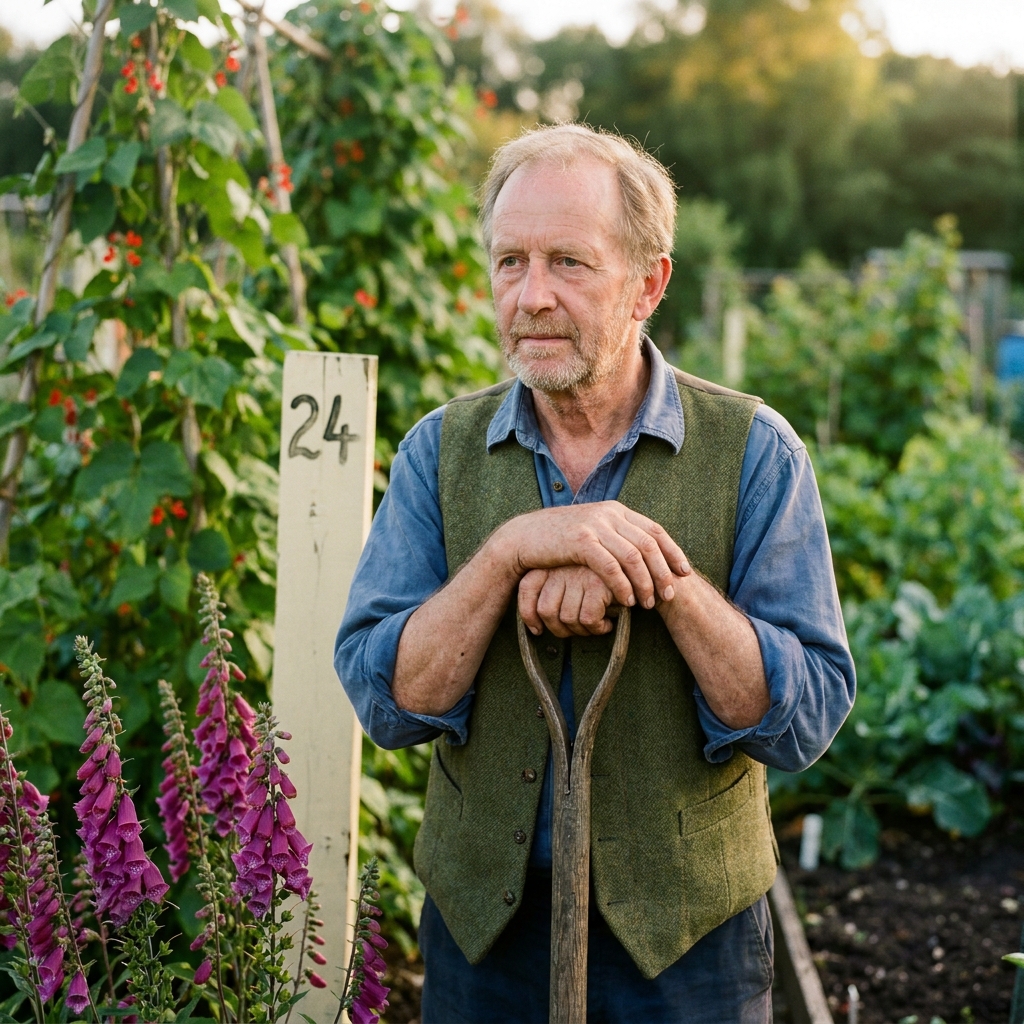
Trustee · since November 2012
Looks after the waiting list and the plot-allocation policy. The first port of call for new tenants in their first season.

Trustee · since January 2018
Magistrate by day. Handles the trust's governance correspondence and the careful reading of the 1970 scheme.
The full set of trustees as of this season also includes Nigel Paul Henshaw, Marion Bradshaw, Jane Beachus, Susan Swinscoe, Richard Tempest-Mitchell, Lynne Henshaw, Elected Mayor Andrew Abrahams, and Terry Clay. None of them are paid; all of them give their time.
Governance, plainly
We are constituted under a Charity Commission scheme of 1970, itself a refinement of the original 1916 scheme. Twelve trustees serve renewable three-year terms, one third standing down each year. Vacancies are filled by trustee resolution and notified to the Charity Commission within the required period.
Quarterly trustees' meetings cover finance, tenancy, capital projects, and complaints. The annual general meeting in May is open to any resident of the parish; we publish notice of the AGM in the parish hall foyer and on this website at least twenty-eight days in advance. Decisions of substance are taken only at quoracy of seven; routine business is taken by majority.
Conflicts of interest are recorded in a register held by the chair and read aloud at the start of each meeting. Trustees may not bid for trust contracts. Trustees may take a plot tenancy on the same terms as any other resident; in 2026, five of the twelve do.
The 1970 scheme, our latest annual return and accounts, and the trustee register are public records and are linked from our Charity Commission listing. Older paperwork — the 1916 scheme as written, the early ledgers, and the bound minute books from 1949 onwards — is held at the parish hall and at the Nottinghamshire Archives in Castle Meadow, Nottingham.
The figures below cover the year to 31 March 2025 and are summarised from the audited accounts. Our reporting status with the Charity Commission is up to date.
Visit the trust
Our office at the parish hall is open every Wednesday and Saturday morning. No appointment, no application form. Just walk in.